
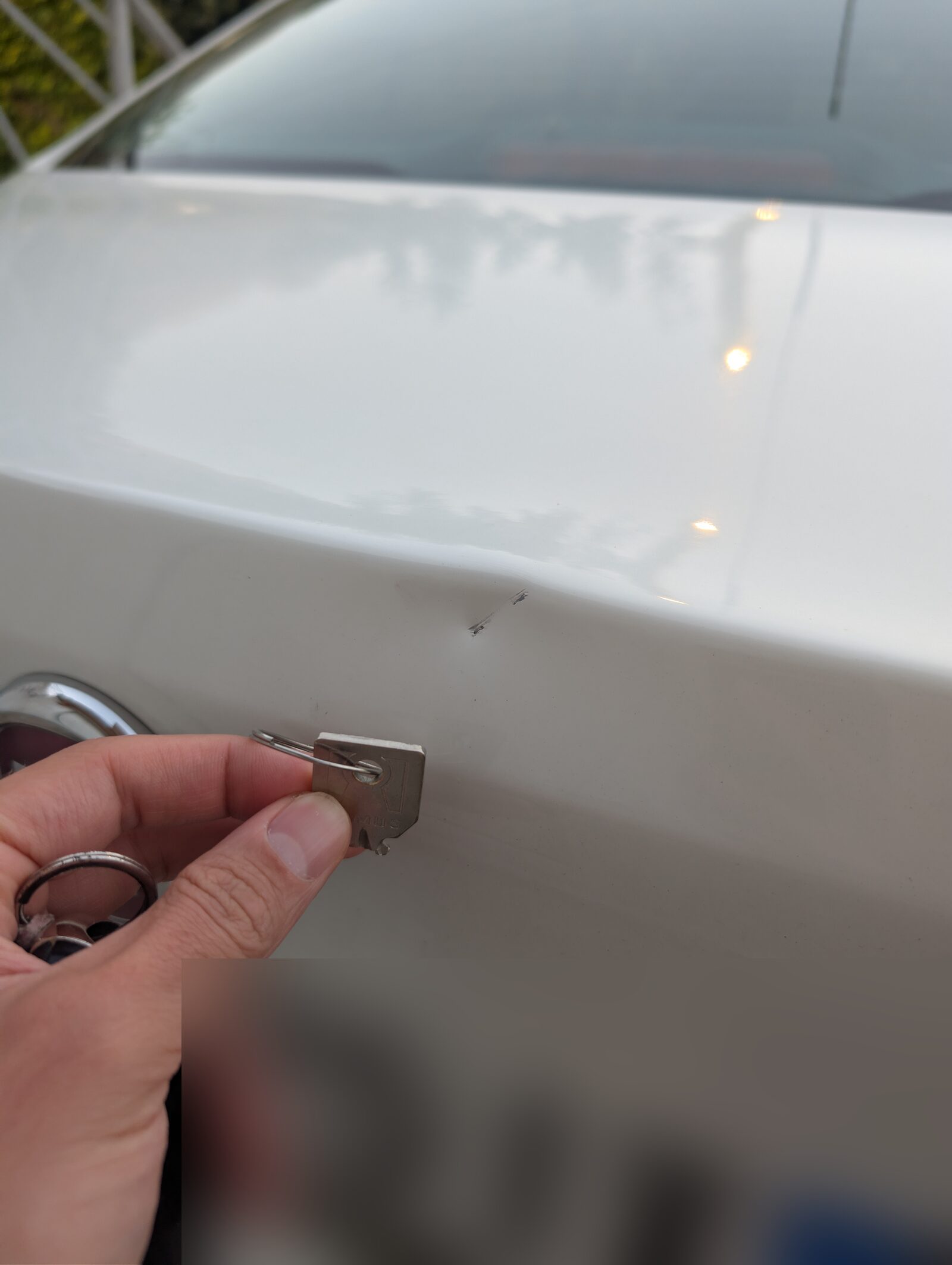
On the fifth day of our trip through Albania I put a small dent in the boot lid of the rental car while parking. A crease and two paint chips, no other car, nobody hurt. The rental company later charged €300 for it, plus €40 for paperwork.
Without an AI agent in my pocket, that would have been a two-minute story: take a photo, tell the rental company, pay at the end, claim it back from the excess insurance. With one, it became the thing I thought about for the rest of the trip.
This is not a post against using AI for travel. It did a lot of things well, and the claim was approved in full. It is about what happens when a tool that never forgets a clause meets a country that runs on phone calls, and about the person stuck in the middle carrying the stress.
What it did well
Before we left, the agent and I built a private repository for the trip: bookings, the rental voucher, the insurance documents, the itinerary Noémie wrote, and a CLAUDE.md so I could pick it up from my phone on the road. Between 24 September and today it took 354 commits, 174 of them during the trip itself. Every expense, every booking change, every “ask the rental company about this” went in there.
Some of that work was genuinely good:
- It read the excess policy in full. Cover4Rentals’ wording defines a public highway as “any road made or unmade”, so the gravel approaches to the mountain guesthouses were covered. That settled a worry that had been shaping the route.
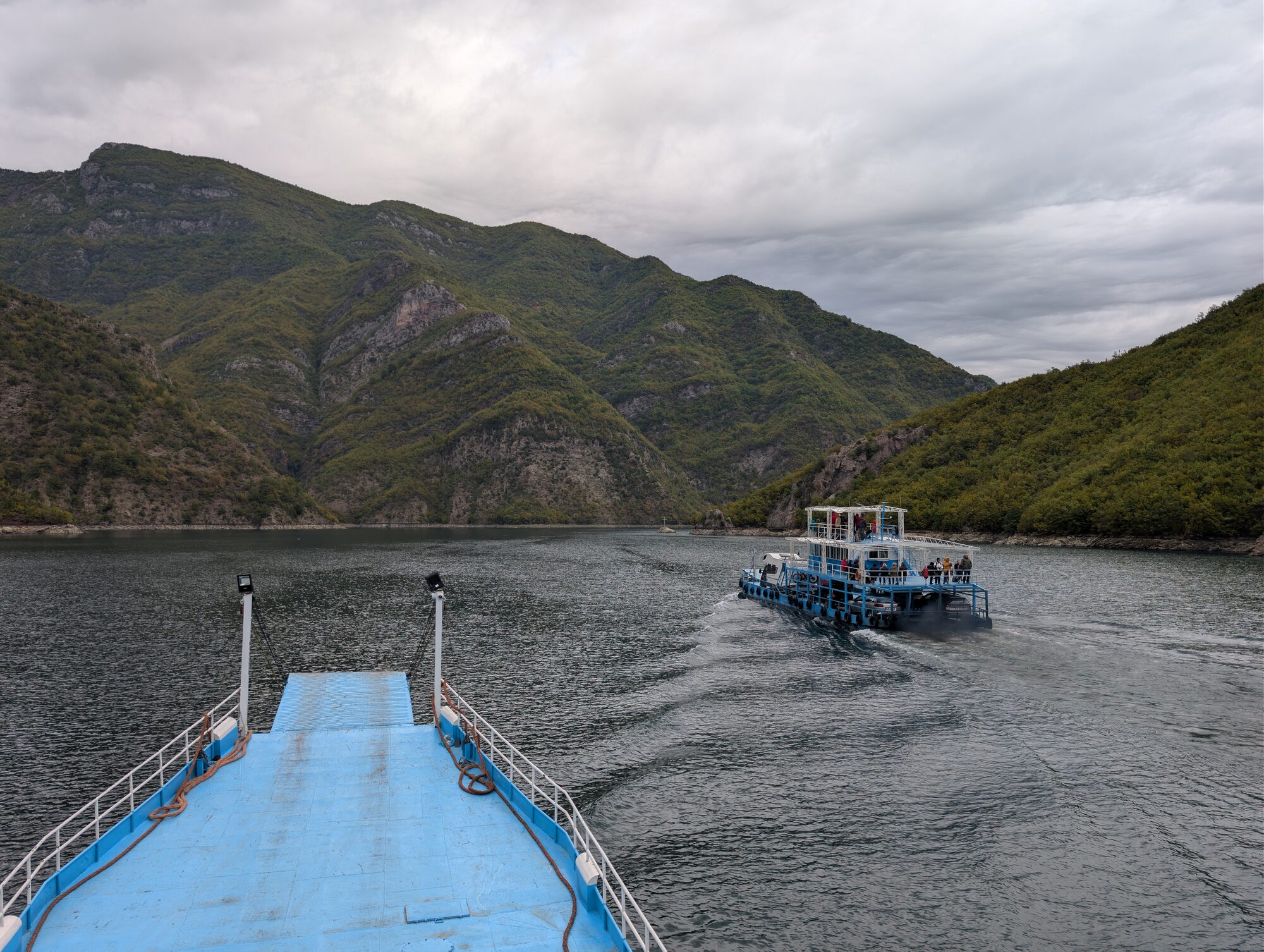
- It checked the ferry. We wanted to take the car on the Koman lake ferry. It searched four policy documents for ten words (ferry, boat, vessel, sea and so on) and found zero hits, so there was no ferry exclusion to worry about.
- It compared three rental bookings on the total cost, not the headline price, and the cheaper one won by €65.
- It caught the trip’s timing traps: a 19:30 car return against a 20:15 flight, a mountain leg the plan treated as a short hop, when there is no road across and the drive round takes over three hours.
And after the trip, it put the claim together. The rental company’s invoice described the damage as a scratch on the rear bumper, a different part of the car, and listed the payment against the wrong card. The agent spotted both, wrote a short cover note explaining them, and assembled the uploads. The claim went in on 14 October and was approved on 24 October for the full €340.
That part I would happily do again.
The police report
The policy has an exclusion for accidents “not reported to the police … where required by local law”. That last part is a condition. It does not say every dent needs a police report. It says one is needed when the law of the country says so.
The agent read it as a default. Within an hour of the dent, my to-do list said: ask the rental company on WhatsApp whether a police report is needed, and if they say yes, or do not reply by tomorrow, go to the police before leaving the village.
Twenty minutes later it found that the rental contract itself had no police clause at all. The plan did not change.
No written answer came by the deadline. So I did what my phone told me. I went looking for a police officer, found one, and explained that I had dented my own rental car while parking and would like to report it.
He was confused. Not unfriendly, just puzzled about what I wanted from him. A small dent, one car, nobody else involved, nobody hurt. There was nothing for him to do. I walked away feeling a bit ridiculous, and also not quite reassured, because now I had tried to report it and had nothing on paper to show for it.
The rental company eventually answered by phone, not in writing: no police report needed. They said it again in person at the return desk. The agent’s next to-do list still asked me to get that confirmation “in writing (email or on the damage report)”. I told it no. The claim went in without a police report, and was paid.
The European Accident Statement
The second chase was the European Accident Statement, the standard form drivers fill in together after a collision. The agent kept coming back to it. Fill it in, it would make the claim stronger.
Two problems. The form exists so that two drivers can record agreed facts about a crash between their vehicles. I had dented my own car on my own. There was no other party to agree anything with. And the car did not even have one in the glovebox, which is the rental company’s omission, not mine, so I could not have filled it in even if it had made sense.
Neither of those stopped the reminders.
The to-do that grew
Because everything went into git, I can measure the worry. The dent started life as one item in the trip’s to-do list. Over the next two weeks that one item was rewritten 22 times, and it grew from 97 words to 775. The final version mentions the police five times.
For scale: the dent itself is about the size of a thumbprint. The paragraph about it is longer than most of my emails.
None of those 775 words are wrong. They list the pickup damages already on the contract, the deposit, the excess, the cards, the documents to request at the return desk, the claim’s upload slots. Each line is a reasonable precaution. Together they are a weight I carried up and down the mountains for two weeks, over an outcome that was never really in doubt.
Why it behaved like that
The agent was not being stupid. On paper its reasoning holds up: a clause exists, the downside of ignoring it is a refused claim of up to €1,350 (the excess on the signed contract), and the cost of a police report is “some time”. Minimise the worst case and the advice follows.
What it cannot see is everything on the other side of that sum:
- The cost of the action is not “some time”. It is an afternoon, in a village, with a toddler, trying to explain a non-event to an officer who has better things to do.
- The cost of carrying it. An open item with a deadline sits in your head. That is not on any list.
- How the place actually works. In Albania a lot runs on cash, a phone call and a handshake. The “optional” car park at the Blue Eye was 300 lek, cash, no receipt. The rental company confirmed the ferry permission on WhatsApp and the police question on the phone. The state’s own online traffic-fines checker was broken for everyone during our trip because the domain it loads from no longer exists. Insisting on written confirmation from a system that answers by phone is not prudence. It is a mismatch.

The irony is that I had already won this argument once, before we left. When we were confirming the €50 ferry fee, I wanted to write to the local rental desk in Albanian. The agent argued against it, because the fee was published in the terms and so “there was no other price to find”. I thought it was missing the point: a published fee constrains a terms page, not a counter, and writing to a local desk in its own language makes them less likely to invent an extra charge in the reply. It came round, and we sent the email in Albanian first and English below. The fee stayed at €50.
That is the same blind spot from the other direction. The agent is excellent at the document. It is weak at the place the document is being applied in, and it has no feel for which rules are enforced, which are a formality and which nobody local would recognise at all.
Too much information

I keep coming back to a simpler version of this. Ten years ago, I would have rented the car, dented it, shrugged, and paid. Maybe I would have read the excess policy, probably not. The claim would have been just as valid.
What changed is not the risk. It is access. I now have a tireless reader in my pocket that has read every clause of every document I own, and that will, if I let it, turn each one into an action. Every action it suggests is defensible. The sum of them is bureaucracy, and I generated it myself.
I think this is going to be a broad pattern, well beyond travel. We are moving into a time where everyone has instant access to every rule, every exclusion and every edge case, and an assistant that is rewarded for never missing one. That produces more confirmations, more “just to be safe” steps, more paperwork that the people on the other side, like the police officer, never asked for and do not know what to do with. It is the same thing I saw at work in We Find Them Faster Than We Fix Them: honest verification opens more items than it closes.
Information is not free just because it is instant. Someone has to carry it.
What I would do differently
I would still take the agent. The planning, the policy reading and the claim pack saved real money and real hours. But I would set the terms differently:
- Ask for proportion, not completeness. “What is the realistic worst case here, and how likely is it?” gets a much better answer than “what should I do?”
- Treat “where required by local law” as a question for a local. The rental desk, a guesthouse owner, anyone who lives there. They knew immediately. The agent never could.
- Let a phone call count. If the people who matter say it is fine, it is fine. The paper trail I actually needed was the one the rental company produced anyway: their damage report and their invoice.
- Notice when the to-do is bigger than the problem. A 775-word item about a dent is a signal, and the signal is to close it, not to add line 776.
The claim was paid. The dent was never the problem. The problem was that I knew too much about it.
Numbers in this post come from the git history of the private trip repository: total and in-trip commit counts, and the length of the dent’s to-do item at each of the 22 commits that rewrote it. They can be rebuilt with data/build.sh. The police officer and the accident statement are from my own memory of the trip; they were in phone conversations with the agent, not in the repository.
