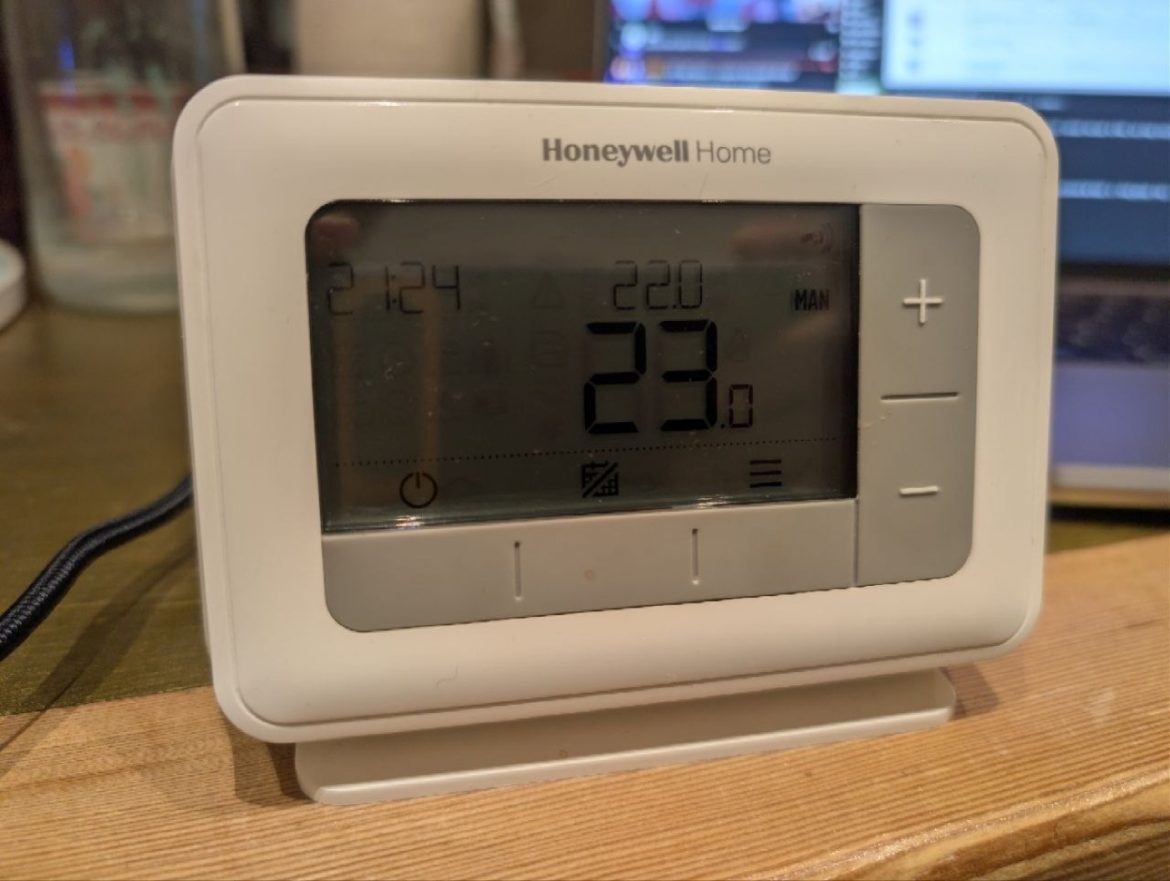
I picked up three LiitoKala 34B flat-top 18650s to populate the Waveshare UPS Module 3S sitting under my Raspberry Pi 5 home server. The cells are sold as a Panasonic NCR18650B rewrap — the printed cell label reads NCR18650B Li-ion. They came from the LiitoKala official store on AliExpress at about $2/cell after coupons and AliExpress coins (closer to $4 at sticker), which is well under half what genuine retail-channel Panasonic cells go for.
Tools & Automation
I started using Claude Code in December last year. In four months, I’ve delivered what my team would have needed two or three years to ship — at least. That sounds like a happy ending. It isn’t quite.
Last year I went to the Google Cloud Summit with a few colleagues. We saw a lot of impressive projects built around agents and LLMs, and walked out a bit deflated. As a data team — analysts, engineers, but not “pure” software developers — we could see the value clearly, but we’d seen this movie before: the moment we wanted to build something real, we’d be queuing up for backend developer time, or pricing out an external consultant to implement agents for us. Same bottleneck as always, just with a fancier label.
A year later, that bottleneck has quietly dissolved. We built it all ourselves — fast — with Claude Code as the agent in our IDEs. The projects we thought we’d have to outsource, we shipped on quiet afternoons.
And it isn’t just the work-shaped projects. I’m finally shipping ideas that have sat in my personal backlog for literally ten years — the kind of thing where every time you open the notebook you remember why you closed it last time. Now they’re real, deployed, and — the part I keep being surprised by — they’re solid. Tests, sensible error handling, security defaults that hold up to scrutiny. Not vibey demos. Things I’d hand to a friend without a list of caveats.
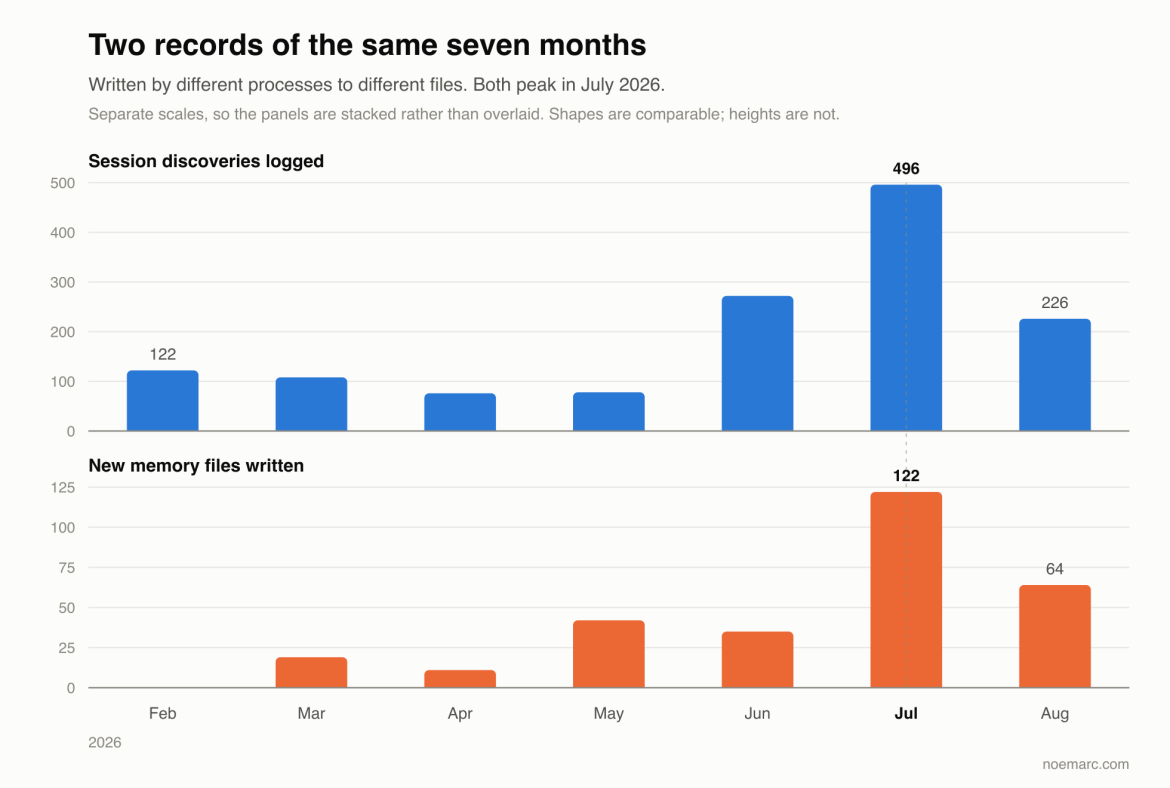
When people ask how much faster I work with the agent, my honest answer is that “faster” is the wrong axis. I built this chart for an internal talk last week to explain why.
I wrote three months ago about the context files and memory system behind my AI coding agent. This post is the follow-up I wish existed back then: the concrete tricks and patterns that make the agent reliably useful, not just occasionally impressive. Most of these are small. They compound.
In January I mounted a Crucial P3 Plus 4TB NVMe on a Raspberry Pi 5 inside an Argon Neo 5 M.2 case and moved everything onto it — Immich photo library, motionEye camera recordings, Docker volumes, a few databases, the odd SFTP sync target. It worked. Then it froze. A week later, it froze again. Then every few days. Then every few hours.
What followed was four months of hunting a ghost. If you are running a DRAM-less NVMe (P3 Plus, WD Blue SN580, Kingston NV2/NV3, HP EX900, many others) on a Pi 5, this post is written for you.
TL;DR. The Pi 5’s firmware disables Host Memory Buffer by default; DRAM-less drives need HMB to stay alive under load. There is no fix that makes a DRAM-less drive truly stable on a Pi 5 — only mitigations (HMB on, PCIe Gen 1, throttle stack) that reduce the wedge rate without eliminating it. The Practical Checklist below is the mitigation list. The full post is the four-month version of how I got there — and why the only real answer is to replace the drive with one that has on-board DRAM.
Google Secret Manager costs money. Not much per secret, but when you run five side projects across four servers, and each has its own set of API keys, database passwords, and service tokens, the bill adds up — and so does the cognitive overhead of managing IAM permissions, service accounts, and secret versions across multiple GCP projects. So I replaced it with a private GitHub repo and age encryption.
I have been using an AI coding agent as my primary development tool for three months. Not a chatbot I paste code into, but an agent with filesystem access, shell execution, and persistent memory that works inside my terminal. It reads my codebase, runs my tests, pushes my commits, deploys my services, and remembers what it learned yesterday. This post is about the technical patterns I have developed to make that work well — the context files, the memory system, the tool integrations, and the compounding feedback loop that makes it better over time.
We had three Cloud Functions handling exchange rate data. One fetched rates from an external API and wrote them to Google Cloud Storage. A second read from GCS and loaded into BigQuery. A third was an abandoned earlier attempt that loaded directly from the API to BigQuery but had never been decommissioned. Three functions, three sets of logs, three potential failure points — for what is fundamentally one job: “get today’s exchange rates into BigQuery.”
We have an AI-powered Slack bot that answers business data questions. It uses a knowledge base — schema descriptions, business rules, SQL query patterns — to generate accurate queries. The problem: this knowledge base must stay in sync with two upstream repos. When a BI model changes, the bot needs to know about new dimensions and measures. When dbt models change, the bot needs an updated schema index. Keeping this in sync manually was a recipe for stale knowledge and wrong answers.
We lost ~25 webhook events in 7 minutes because our Cloud Run service was scaling to zero. Here is how I used Cloud Scheduler to toggle min-instances during business hours — and the workaround for Cloud Scheduler not supporting PATCH requests.